
Business Intelligence & KPI
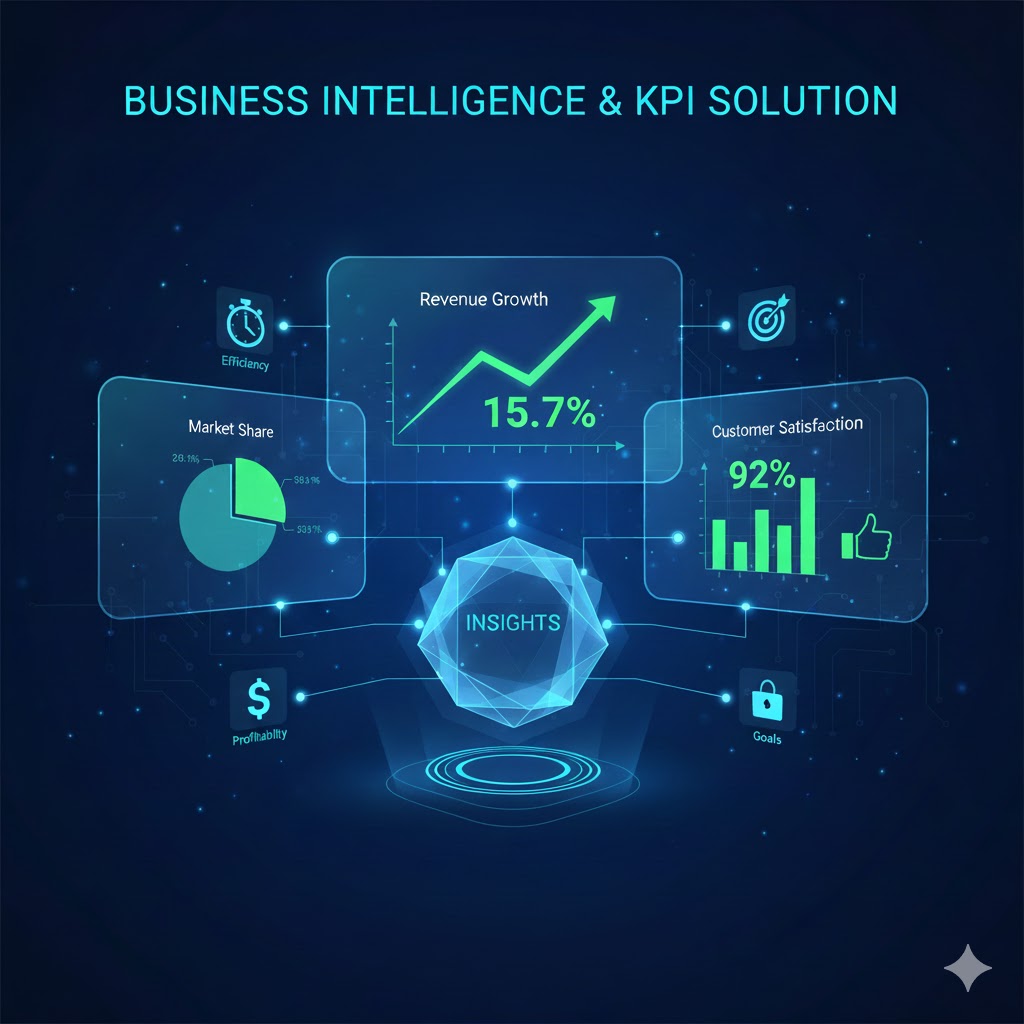
Strategise with Business Intelligence & KPI
Business Intelligence (BI) and Key Performance Indicators (KPIs) are foundational concepts that work together to help organisations make data-driven decisions, track performance, and achieve strategic goals.
Business Intelligence (BI)
ShiningBot's Business Intelligence is a technology-driven process for analysing data and presenting actionable information to help corporate executives, managers, and other end-users make informed business decisions.
What it is: BI involves gathering, storing, and analyzing raw data from various sources (sales, operations, finance, etc.).
The Goal: To transform raw data into historical, current, and predictive views of business operations.
Outcome: Provides a comprehensive understanding of what happened and why it happened within the business, often presented visually through dashboards and reports.
Key Performance Indicators (KPIs)
ShiningBot's KPIs are specific, measurable values that demonstrate how effectively a company is achieving its key business objectives. They are the metric targets that a business uses to track and evaluate performance over time.
What they are: KPIs are a subset of all business metrics. They are the most critical measurements that directly tie back to strategic success.
The Goal: To quantify the execution of strategy, help focus efforts, and allow management to take corrective action when targets are missed.
Characteristics (SMART Principle): Effective KPIs are Specific, Measurable, Achievable, Relevant, and Time-bound.
The Relationship: BI Fuels KPIs
BI tools are essential for the effective use of KPIs.
Data Collection & Calculation: BI systems automatically collect and process the data needed to accurately calculate KPIs.
Monitoring & Visualisation: KPIs are typically visualised on BI dashboards, allowing managers to monitor performance against targets in real-time and quickly identify trends or anomalies.
Root Cause Analysis: If a KPI shows underperformance (e.g., "Customer Churn Rate" is too high), the underlying BI data can be used to drill down and analyse the contributing factors.
In summary, BI provides the information (the what and why), and KPIs provide the focus (the score and the target), allowing a business to continuously improve performance.